


AI recruiting
Trends & benchmarks
Key takeaways from the 2026 Recruiting Benchmarks Report

We’ve combed through data from over 165 million applications, 15 million candidates, and 1.2 million hires to identify the key trends shaping the recruiting industry in 2026. We’ll share a few highlights here, but you can download the full 2026 Recruiting Benchmarks Report for more details, like segment-specific slices by industry, company size, location, and department.
After years of market turbulence, the recruiting landscape is stabilizing. But it looks fundamentally different from what it looked like in 2021. Gem's 2026 Recruiting Benchmarks Report reveals a talent acquisition function that's leaner, more selective, and operating under sustained pressure. Here's what the data tells us about where recruiting stands today and what it means for your hiring strategy in 2026.
Gem’s sixth annual Recruiting Benchmarks report provides insights into hiring trends, application volumes, team workloads, source channel metrics, and candidate passthrough rates. Based on data from June 2021 to May 2025, covering over 165 million applicants and 1.2 million hires, this report helps talent leaders compare their performance to industry averages and refine their strategies.
Hiring is recovering, but we're not going back to 2021
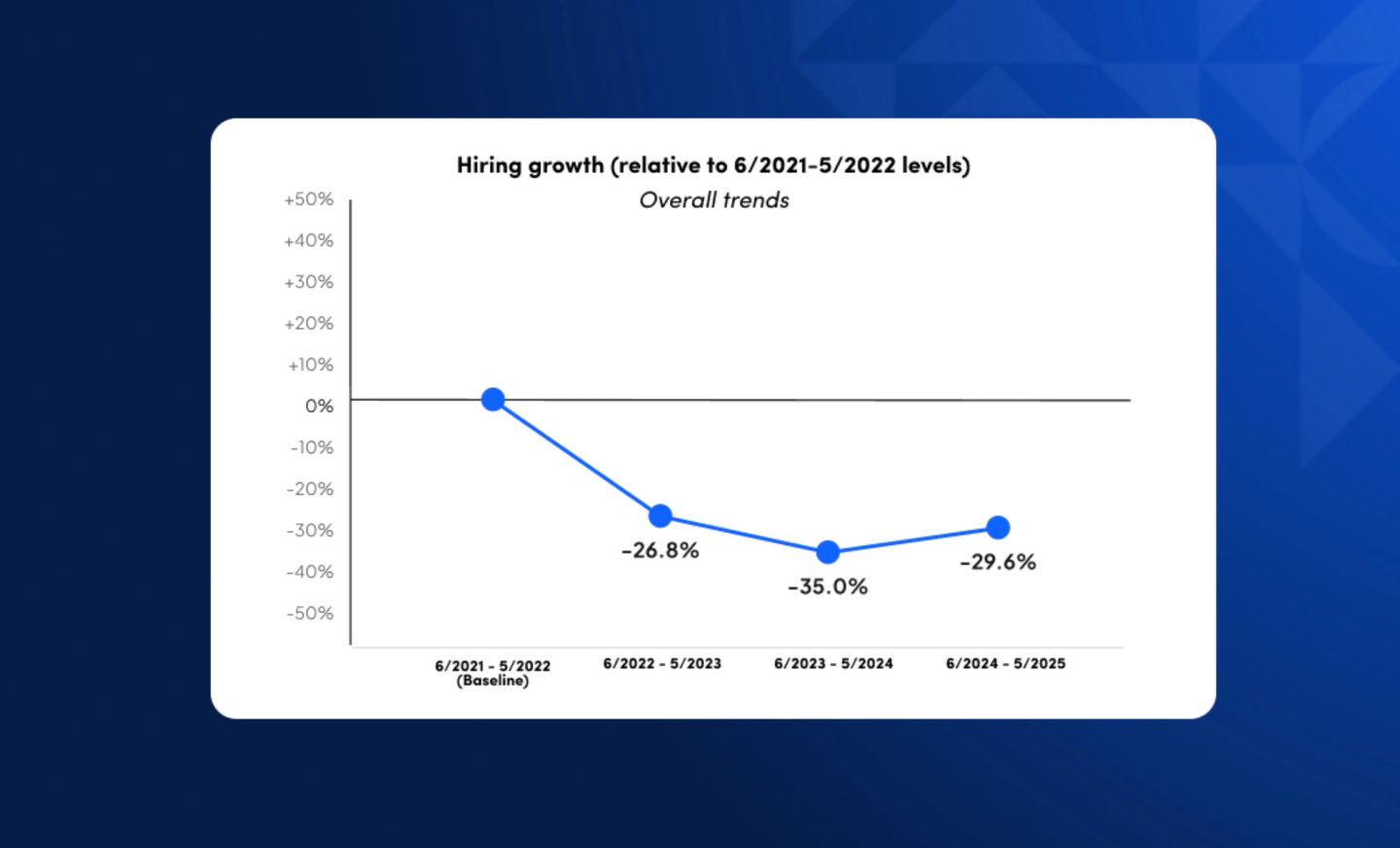
The good news: aggregate hiring is up 8.3% year-over-year, marking the first sustained rebound since the 2021 peak. The reality check: overall volumes remain roughly 30% below pre-downturn levels. This isn't a return to growth-at-all-costs hiring. It's a measured recovery led primarily by smaller and growth-stage companies. Enterprise organizations, in particular, are moving more cautiously, suggesting the market has shifted toward disciplined, intentional growth rather than rapid expansion.
Recruiting teams have reset at a leaner baseline
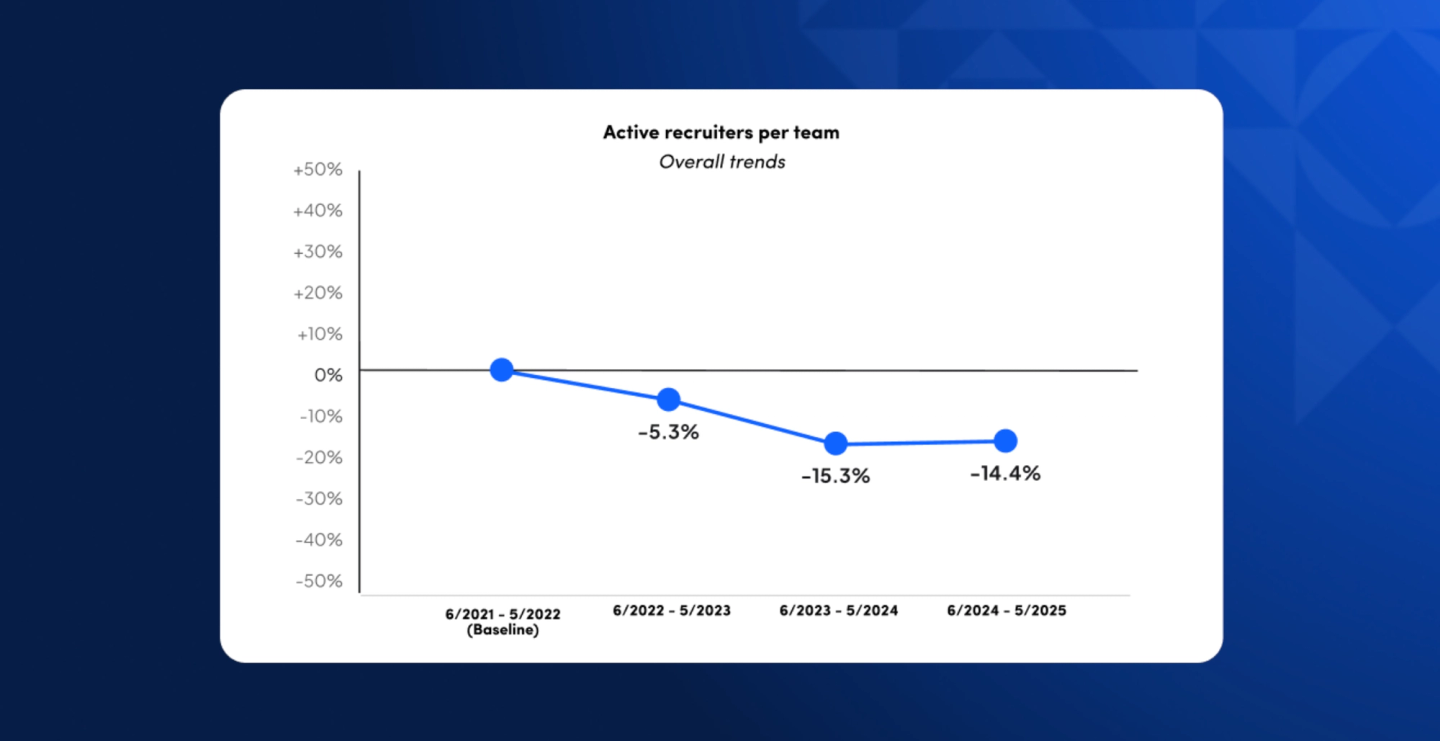
Recruiting headcount is down 14% compared to 2021, but the year-over-year decline has finally stabilized. Teams that survived the cuts of 2022-2024 are now the new normal, and the data suggests the steepest reductions are behind us. For talent leaders, this means planning for sustained efficiency rather than waiting for teams to return to previous sizes.
Recruiters are managing unprecedented workloads
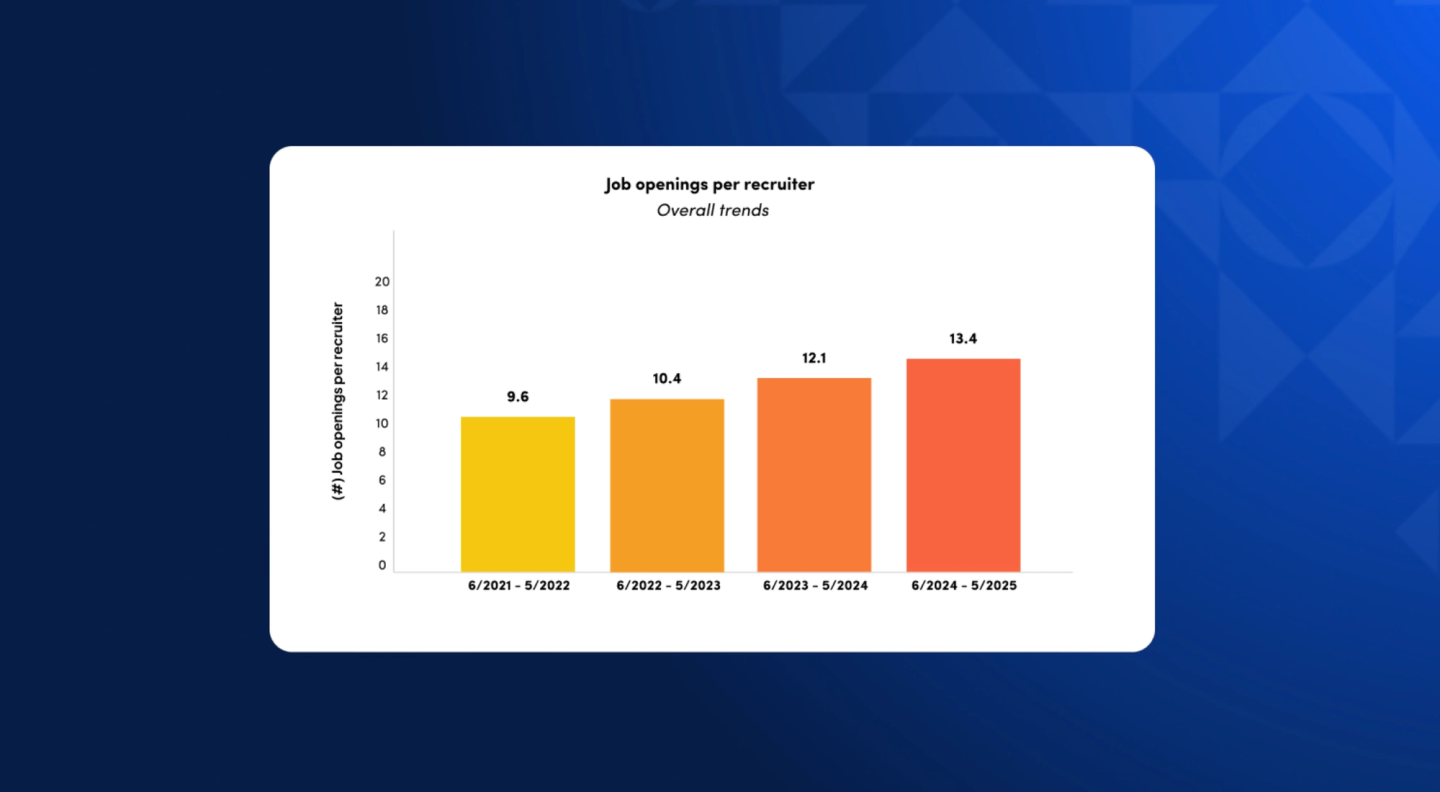
Here's the starkest indicator of how much has changed: recruiters are handling 93% more applications than in 2021. Recruiters are managing 13.4 open roles at a time while candidates face steeper competition.
Hiring processes are longer and more resource-intensive
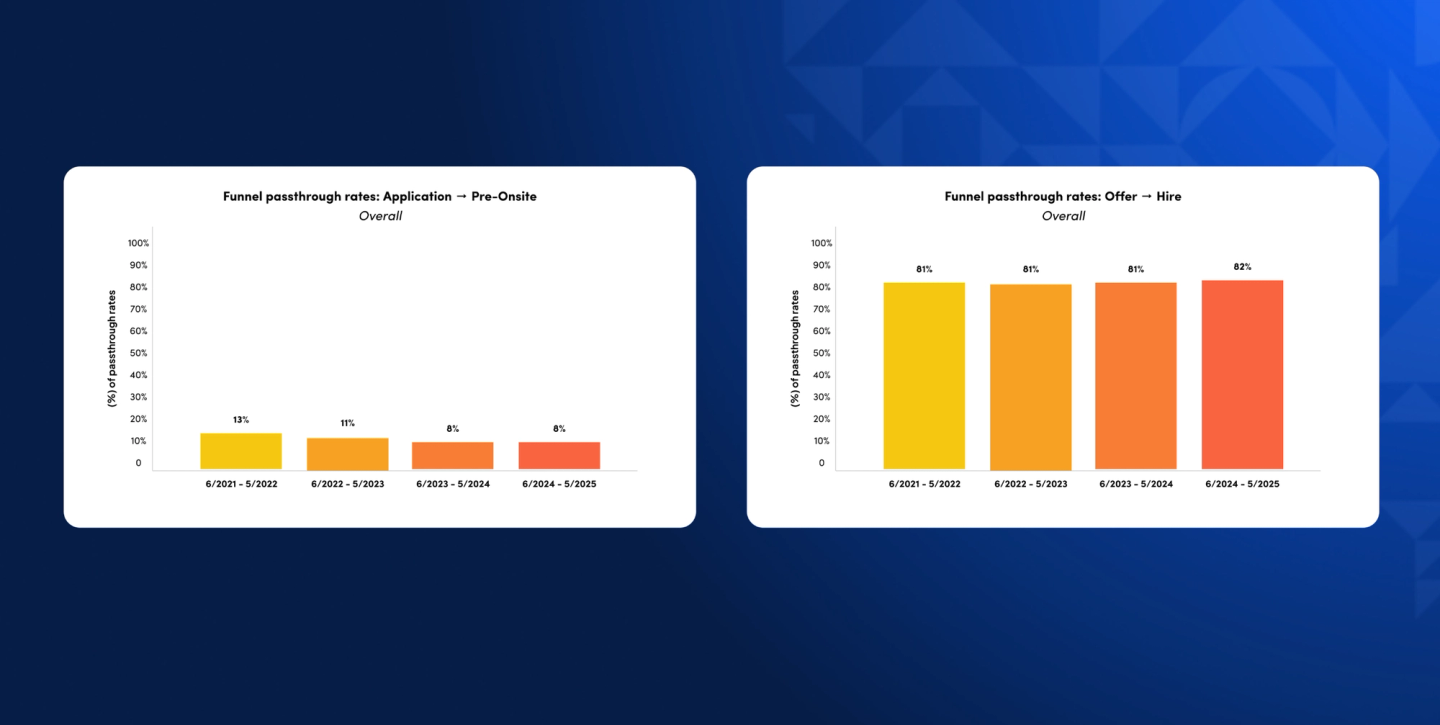
Organizations are interviewing more candidates and conducting more thorough interviews before making offers. The average number of interviews per hire has increased by 33% since 2021. This trend isn't limited to specific roles – both technical and non-technical roles are seeing steep increases as precision increasingly supersedes speed across all functions. The message is clear: companies are willing to invest more time upfront to ensure they're making the right hire.
Sourcing still delivers the highest-quality hires
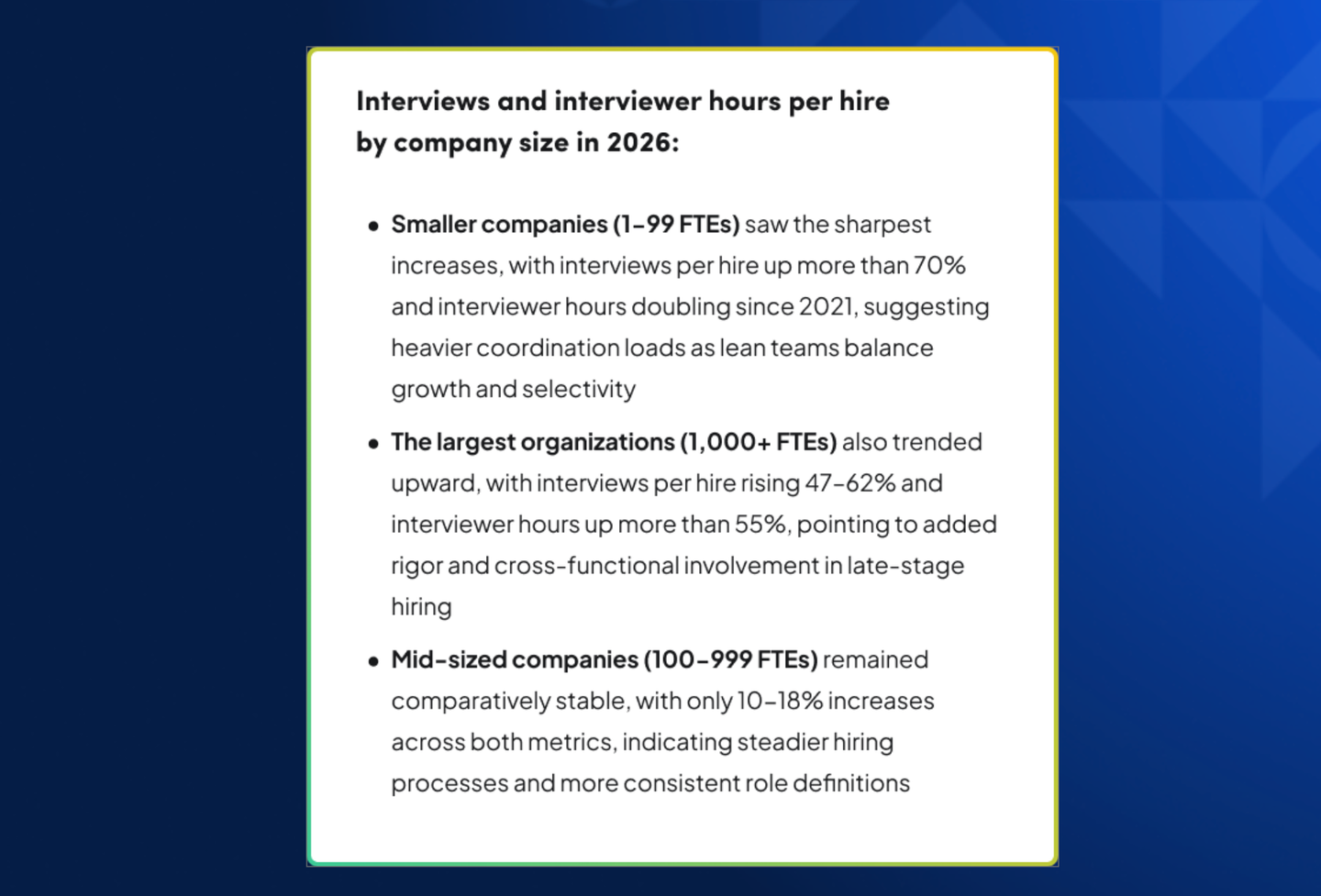
Job boards and company marketing channels generate roughly 90% of all applications but account for only about half of hires. Meanwhile, relationship-driven channels continue to punch above their weight. Direct sourcing delivers 11% of hires from just 2.6% of applications — a 4x yield. Referrals convert at 11x the rate of inbound applicants, and internal mobility at 32x. The takeaway: Sourced candidates are nearly eight times more likely to be hired than inbound applicants. Quality talent is most often found through deliberate relationship-driven approaches, not by waiting for applications to roll in.
Rediscovery is one of recruiting's most underutilized assets
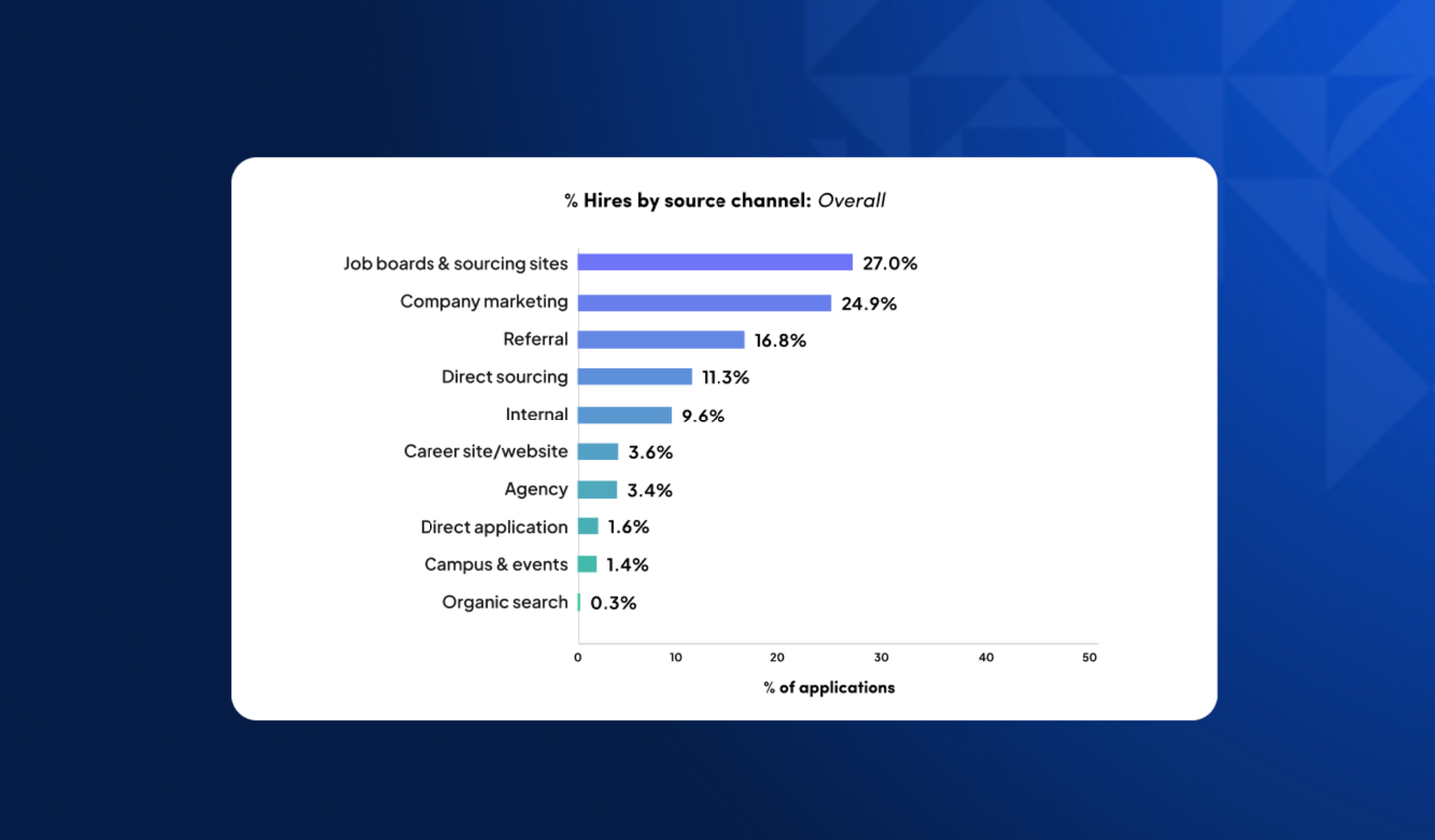
Nearly half (46%) of sourced hires now come from rediscovered candidates — people already in a company's CRM or ATS — up dramatically from 26% in 2021. This shift highlights an important reality: your best next hire might already be in your database. Past applicants, silver medalists, and candidates from previous outreach sequences represent one of the richest, most overlooked sources of qualified talent. Before expanding sourcing budgets or adding new channels, mine the data you already have.
Funnel conversion is tighter, but close rates remain strong
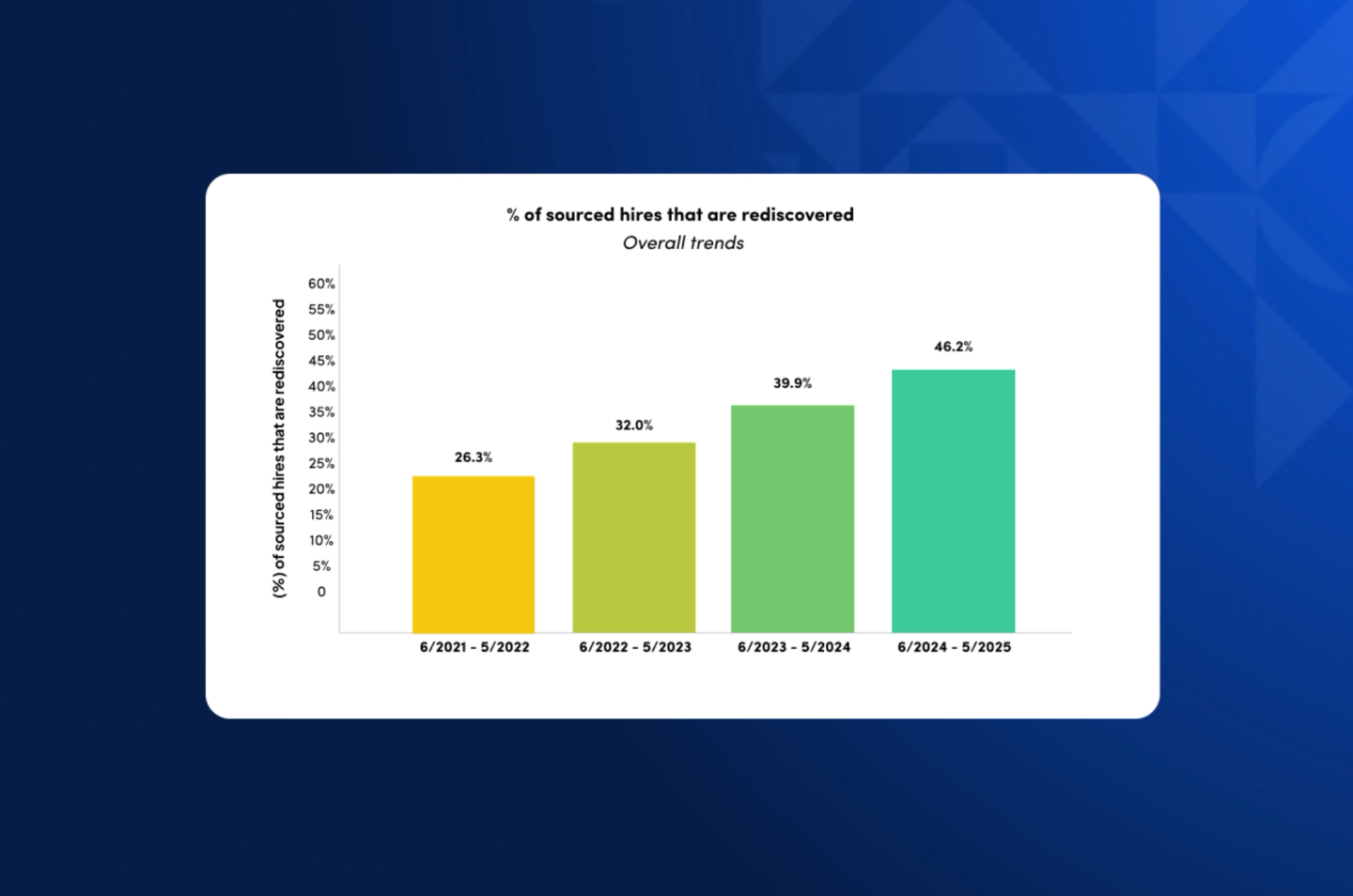
Only 8% of applicants advance past initial screening, and just 0.5% ultimately receive offers, roughly one hire per 200 applications. These numbers reflect how selective the market has become. However, once candidates reach the offer stage, 82% accept, which is the highest acceptance rate since 2021. This suggests that, despite longer hiring cycles and more intensive screening, candidates are committing with confidence when they do receive an offer.
Company size shapes screening strategies in distinct ways
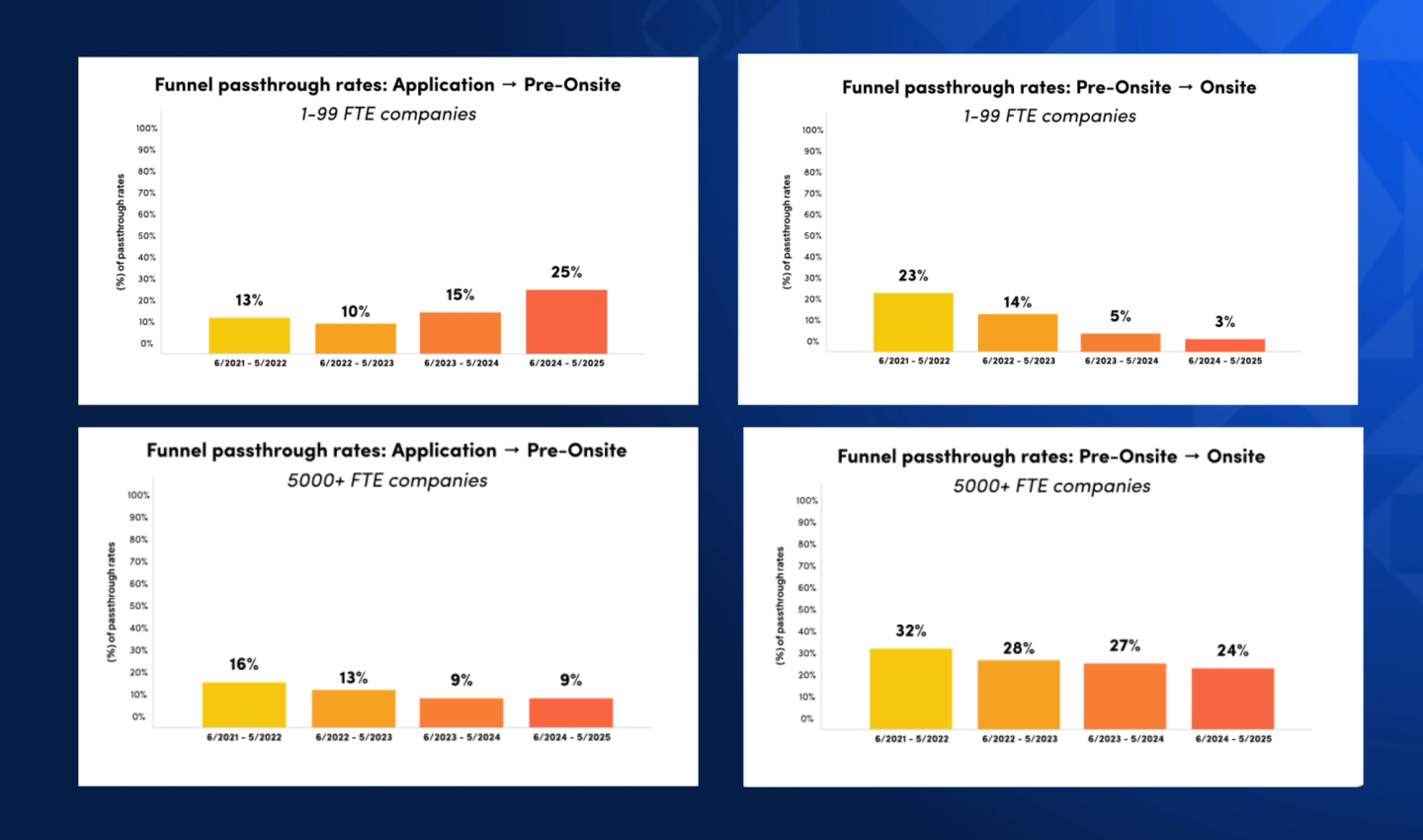
Smaller companies advance far more candidates early in the funnel — 25% of applicants reach pre-onsite stages — but filter aggressively from there, with only 0.3% ultimately hired. Larger organizations take the opposite approach: fewer than 10% of applicants make it to pre-onsite, but their later-stage conversion is stronger, yielding more than double the full-funnel hire rate (0.7% vs. 0.3%). Startups optimize for speed and resource constraints; enterprises emphasize structure and upfront selectivity. Understanding where your organization falls on this spectrum can help you optimize your funnel accordingly.
What this means for your 2026 strategy
The data paints a clear picture: the era of rapid-growth hiring is over, replaced by a more mature, disciplined equilibrium. Recruiters are managing heavier workloads with smaller teams. Hiring processes are more thorough. The most successful teams are those that leverage existing relationships, mine their own databases, and make every sourcing decision count.
If you're planning for 2026, focus on efficiency and leverage. Invest in tools that help your team do more with less. Prioritize sourcing strategies that deliver quality over volume. And don't overlook the talent already in your system. Your next great hire might be someone you already know.
Want to dive deeper into the data? Download the full 2026 Recruiting Benchmarks Report to explore detailed breakdowns by company size, department, source channel, and funnel stage.